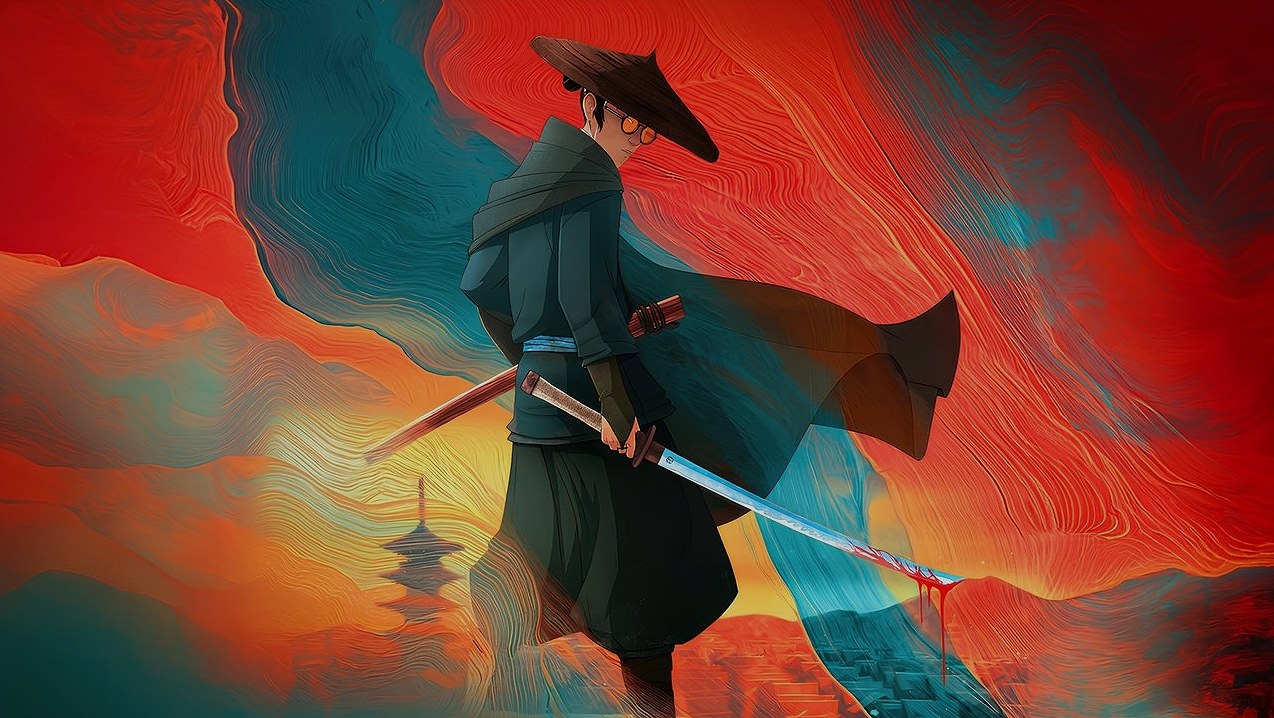
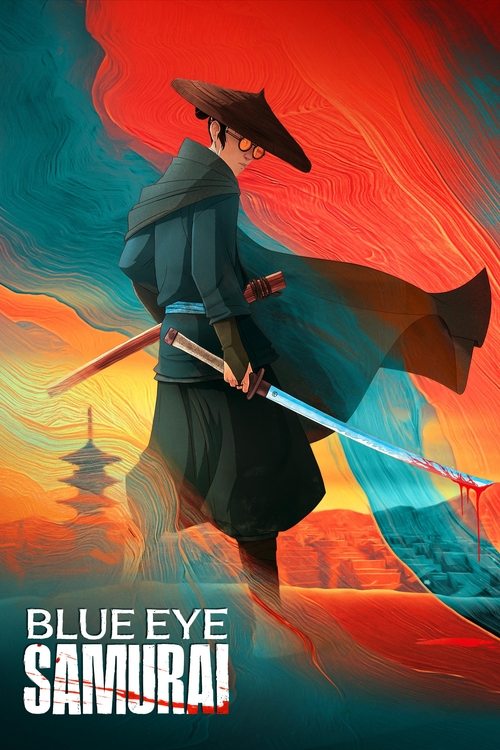
Blue Eye Samurai is not just another action-packed animated series; it is a work that boldly challenges the image of samurai in pop culture by presenting a protagonist who is a half-Western woman fighting against prejudice and oppression in Edo-period Japan. Our editorial team considers this one of the best animated series of 2023, seamlessly blending beautiful action, a gripping story, and contemporary social issues.
Plot Summary (No Spoilers)
Blue Eye Samurai tells the story of Mizu (voiced by Maya Erskine), a young woman born with blue eyes from Western heritage. In an era when Japan was closed off and xenophobic, she is shunned by society and must hide her true identity. When she discovers she is the half-breed child of an evil white man, Mizu decides to embark on a quest for revenge, disguising herself as a man to train in swordsmanship and face numerous obstacles. The series unfolds over 8 episodes, introducing a variety of characters, including a swordsmith, old enemies, and a young woman dreaming of freedom from societal constraints.
Performance and Characters
Though animated, the voice acting by top-tier actors brings the characters to life. Maya Erskine brilliantly conveys Mizu's determination and vulnerability. George Takei and Cary-Hiroyuki Tagawa add credibility to the older characters. Supporting characters like Ringo (Masi Oka) and Akemi (Brenda Song) have their own storylines that are no less compelling than the protagonist's. The gradual character development allows viewers to connect with each character's inner conflicts.
Direction, Visuals, and Music
The visuals of Blue Eye Samurai are both beautiful and brutal. Fight scenes are meticulously choreographed, with swordplay, movement, and splattering blood reflecting the era's violence. Color and lighting are used to convey emotion and atmosphere, especially in night scenes that evoke a sense of isolation. The score, composed by a Japanese artist blending traditional instruments with modern orchestration, powerfully enhances every scene's mood.
Editorial Analysis
What makes Blue Eye Samurai stand out is its questioning of identity and discrimination. Mizu is not just a warrior woman but a symbol of those stigmatized by society for things beyond their control. The series also satirizes the rigidity of class systems and gender roles in the Edo period, reflecting issues society still faces today. The unhurried storytelling and complex character arcs give the series depth beyond mere action animation.
Verdict
<p><strong>Blue Eye Samurai</strong> is an animated series worth watching for fans of intense revenge stories and beautiful action. If you are not afraid of violence and enjoy thought-provoking content, this series will not disappoint. We eagerly await the next season.</p>
Screenshots


👍 Pros
- +Beautiful and realistic action, full-on fight scenes
- +Multi-dimensional characters with engaging development
- +Contemporary social issues woven into the story
- +High-quality voice acting by famous actors
👎 Cons
- −Some episodes have a slow pacing
- −First season ends on a cliffhanger, which may frustrate viewers
Top Cast





FAQ
The first season has 8 episodes, each approximately 45-60 minutes long.
It is an original Netflix series created by Michael Green and Amber Noizumi, not adapted from a manga or Japanese anime.
No, it is not suitable for children due to violence, blood, and themes of revenge and discrimination.
No official announcement yet, but the first season's ending sets up a continuation, which is expected if the series is popular.